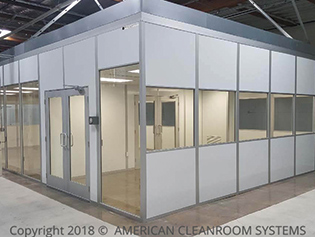
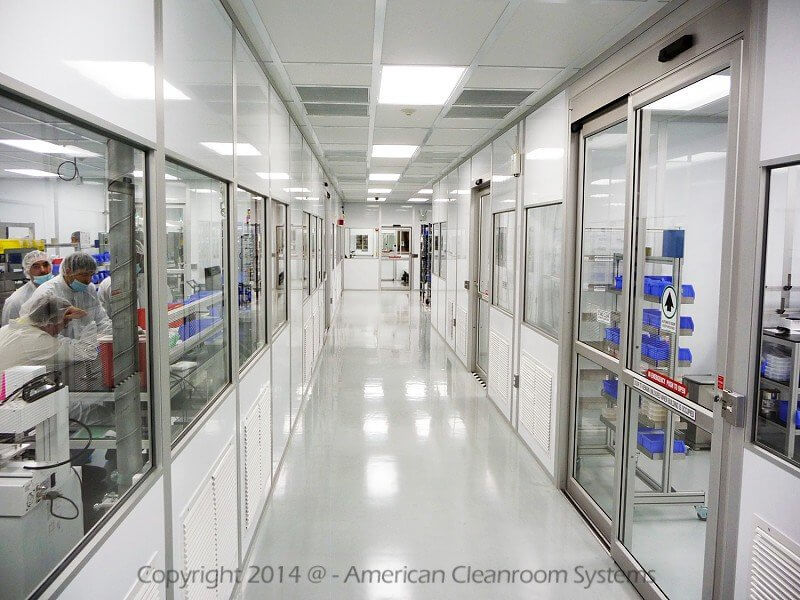
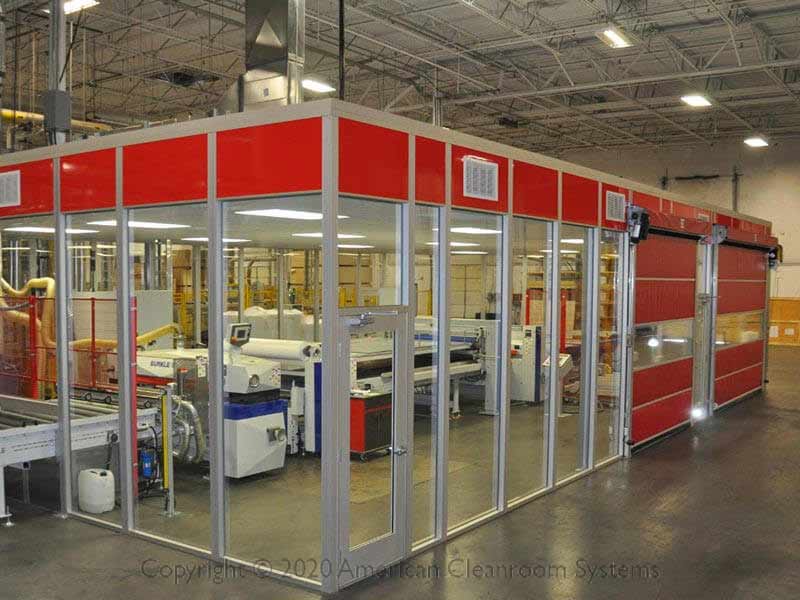
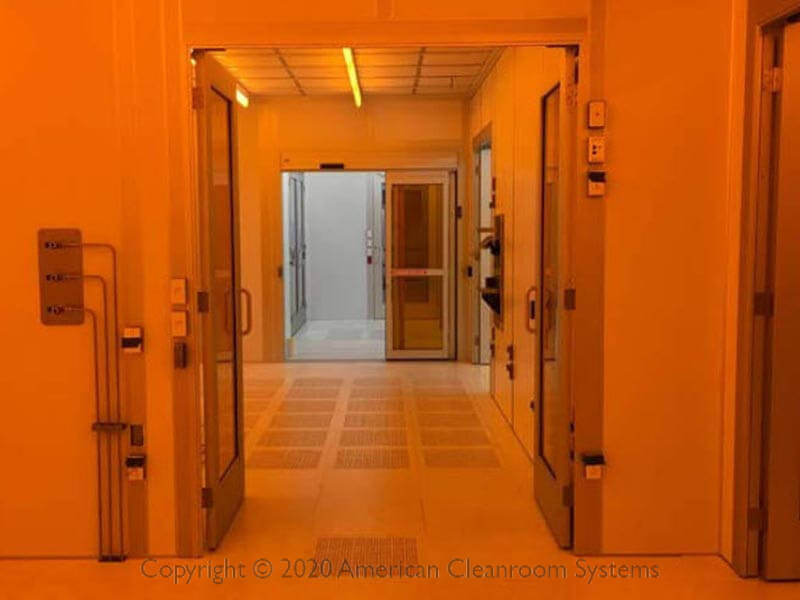
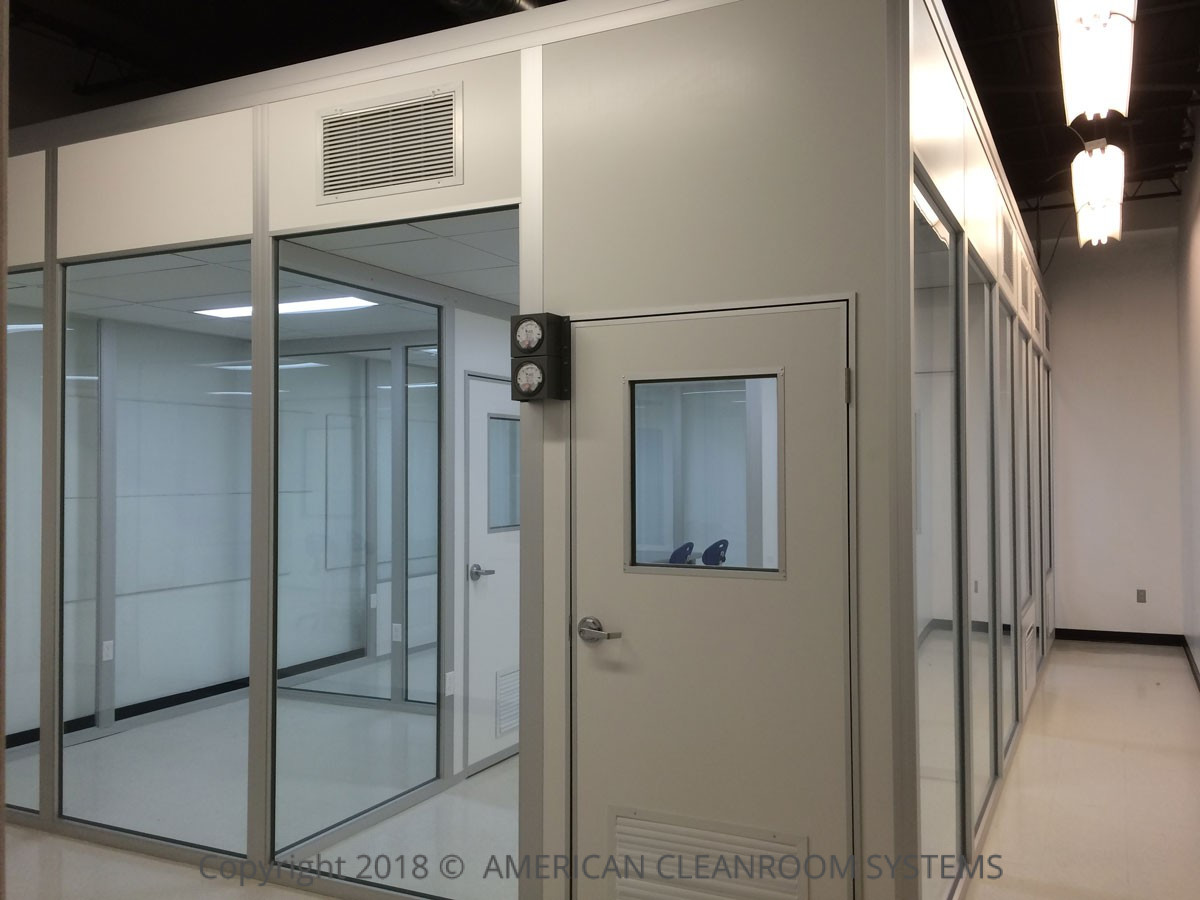
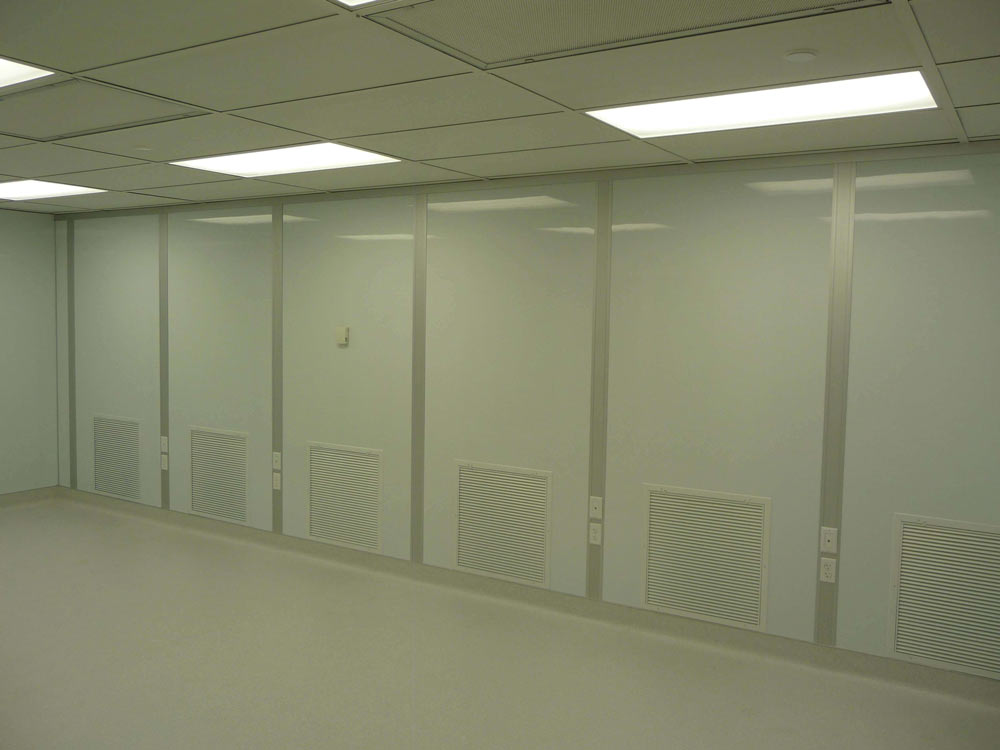
A modular cleanroom is a contamination controlled environment built from prefabricated panels. A modular cleanroom can be installed in half the time as conventional construction. In addition, modular cleanrooms can be easily modified, enlarged or moved to new location. Modular cleanrooms use innovative plenum design to eliminate most ducting, allow the usage of short lead time commercial air conditioning, and allow for easy upgrade to higher cleanroom classification. Modular cleanrooms can be used for ISO-4 thru ISO-8 cleanroom classification. Other benefits include customizable to any size or height, wide material options from chemical resistant to static dissipative, and plus minus 1 degree temperature control. American Cleanroom Systems has built more than 750 modular cleanrooms for the medical device, pharmaceutical, semiconductor and aerospace industry. Our modular cleanrooms are Made in USA.
Request A QuoteFAQs About Modular Cleanrooms
Q: What is Cleanroom Technology?
A: Cleanroom technology is the design, components, and method of installation used to create ultraclean environments (cleanrooms) for applications such as semiconductor, pharmaceutical and medical device manufacturing. Different designs include recirculating cleanrooms, one pass cleanrooms, modular cleanrooms, and softwall cleanrooms. Components include HEPA fan filter units, modular walls, pass thru’s, cleanroom ceiling tiles, interlock systems magnahelic gauges and cleanroom lights. Methods of installation include stick built in field (standard construction) cleanrooms and modular cleanrooms (prefabricated in factory and assembled in field).
Q: What is a Portable Clean Room?
A: Portable cleanrooms are cleanrooms which can be moved without being disassembled. Smaller softwall cleanrooms can be mounted on casters and rolled to new locations inside same factory. It is possible to build a cleanroom on a 40x8 trailer and tow it to different locations.
Q: What Are The Features and Benefits of Modular Cleanrooms?
A: Modular cleanrooms offer all the same features of standard built cleanrooms (stick built). They can go from ISO-5 to ISO-8 (class 100-100k) with temperature and RH control. They can also have motorized sliding doors, roll up equipment doors, pass thru’s, gown rooms, heat welded vinyl flooring, windows, air conditioning, static dissipative walls, and chemical resistant walls. Modular cleanrooms can be used for all industries – pharmaceutical, medical device, industrial, defense, aerospace, semiconductor, food, E-liquid, CBD, and government. Cost is very similar to standard construction.
Benefits of using a modular cleanroom vs. standard construction include faster manufacture and installation. Another benefit is the ease of modification if the customer needs to increase the size, add more rooms, or upgrade cleanroom class. It is not uncommon to disassemble a modular cleanroom and reassemble it at another location. Some people classify the modular cleanroom as temporary equipment enclosures allowing them to bypass the cost and delay of building permits and also get favorable tax treatment.
Q: What Industries Are Each Type of Cleanroom The Most Common In?
A: The semiconductor industry was one of the first industries to adopt cleanrooms. The extremely small feature size (less than 1 micron) on computer chips require class 100 cleanroom to achieve good manufacturing yield.
The pharmaceutical industry is a major user of cleanrooms to maintain sterile environment for drug manufacturing. The FDA validation and CGMP requirements mandate the use of controlled environments such as cleanrooms.
The medical device industry is also a major user of cleanrooms to maintain sterile environment for drug manufacturing. Like the pharmaceutical industry, the medical device industry is regulated by the FDA. CGMP requirements mandate the use of controlled environments such as cleanrooms.
The defense industry is a major user of cleanrooms. From precision electronics, lasers, solid state sensors to composite manufacturing, there are many applications that require cleanrooms for good manufacturing yield or accurate test measurements.
Other places that use cleanrooms include research and development labs, compounding pharmacies, nutraceutical manufacturers, food processors, e-liquid companies, CBD companies, plastic injection molding, aerospace, and test labs.
Q: What is a Mobile Clean Room?
A: A mobile cleanroom is a cleanroom that is built into a trailer and can be moved to different locations. They are often used as temporary cleanrooms while the permanent cleanroom is being renovated. Small softwall cleanrooms mounted on casters are sometimes also called mobile cleanrooms.
Q: What Are Clean Room Requirements?
A: Most common cleanroom requirements include cleanroom classification, size, number of rooms, cleanroom flooring, cleanroom ceiling height, cleanroom chemical resistance, and cleanroom temperature and humidity.
Q: What Are The Different Classes of Cleanrooms?
A: There are both two cleanroom classification standards, ISO and FED 209E. ISO is per cubic meter and FED 209E is per cubic foot.
ISO-8/class 100,000 - This is the lowest cleanroom class. Requirements include 20 air changes per hour of HEPA filtered air and less the 700 particles per cubic foot greater than 5 microns.
ISO-7/class 10,000 - This is the 2nd lowest cleanroom class. Requirements include 60 air changes per hour of HEPA filtered air and less than 70 particles per cubic foot greater than 5 microns.
ISO-6/class 1000 - This is considered a high cleanroom class. Requirements include 180 air changes per hour of HEPA filtered air and less than 7 particles per cubic foot greater than 5 microns.
ISO-5/class 100 class 100 - This is considered the highest cleanroom class. Requirements include between 250 and 300 air changes per hour of HEPA filtered air and zero particles per cubic foot greater than 5 microns.
Q: What is a Prefabricated Cleanroom?
A: A modular cleanroom is often referred to as a pre-fabricated cleanroom because all the components of the cleanroom are custom manufactured in an off-site factory prior to installation. The components are shipped to a job site where they are assembled to create the modular cleanroom. This modular approach can reduce the time of manufacture and installation to 50% of standard construction.
Q: What Are The Components of a Cleanroom?
A: Key components of a cleanroom include HEPA filtration, cleanroom walls, cleanroom plenum, cleanroom ceiling, cleanroom flooring, cleanroom lights, cleanroom doors, magnehelic gauges, interlocks, pass thrus, and air conditioning. Other possible components include cleanroom vinyl strip curtains, cleanroom intercoms, cleanroom exhaust system, humidifiers, and dehumidifiers.
Q: What Are The Components of a Modular Cleanroom?
A: The components of a modular cleanroom can include: cleanroom modular wall system, cleanroom modular plenum, cleanroom t-grid ceiling system, HEPA fan filter units, cleanroom return air walls, cleanroom lighting, and cleanroom doors.
Q: What Are The Applications of a Modular Cleanroom?
A: Applications for modular cleanrooms include pharmaceutical manufacturing, medical device manufacturing, pharmacy compounding, semiconductor manufacturing, research and development, test labs, laser labs, plastic injection molding, mask manufacturing, e-liquid manufacturing, CBD extraction rooms, food processing and nutraceuticals.
Q: What Are The Applications of a Prefabricated Cleanroom?
A: Prefabricated or modular cleanrooms are ideal when customer wants fast installation without sacrificing performance or cost. Other benefits that drive the selection of a prefabricated or modular cleanroom include easy expansion or modification and ability to relocate the cleanroom to a new location.
Q: How Do You Prepare for a Modular Cleanroom Installation?
A: Prior to modular cleanroom installation, the area of install should be cleared. This means removing or raising any ducting, conduit, plumbing or sprinklers that may be in the way. Concrete slab should be patched, leveled and if needed, a moisture barrier installed. Any equipment in the area should be relocated.
Q: How Do You Prepare for a Prefabricated Cleanroom Installation?
A: Prefabricated cleanroom means all the modular components are manufactured and cut to specific sizes prior to shipping from the factory. The area of cleanroom install should be clear and a concrete slab prepared for cleanroom flooring. Unlike standard construction, the assembly of a prefabricated cleanroom does not create significant dirt and can be completed much faster.
Q: What is a Pharmaceutical Cleanroom?
A: A Pharmaceutical Cleanroom is a cleanroom that is used for pharmaceutical manufacturing.


 Spanish