By Anthony Chien
President, American Cleanroom Systems ®
40+ years of cleanroom design and engineering experience
Last reviewed: June 2026
[View Full Author Profile]
Designing a cleanroom is a detailed process, and even well-planned projects can run into issues when certain elements are overlooked. Many of the problems we see are not due to complex technical failures, but rather small decisions made early that create challenges later.
Understanding where cleanroom designs tend to go wrong can help you avoid delays, reduce costs, and ensure the space performs as intended.
If you are still in the planning phase, it helps to start with a structured approach. Our cleanroom design guide outlines the key decisions that should be made before moving forward.
Not Accounting for Heat Load
One of the most common issues in cleanroom design is underestimating how much heat the space will generate. Cleanrooms produce heat from multiple sources, including HEPA filtration systems, lighting, equipment, and personnel.
When HVAC systems are not sized correctly, the result is often a space that struggles to maintain temperature. This can lead to uncomfortable working conditions and inconsistent performance.

Figure 1. Cleanroom bunny suit
Undersized Gown Rooms
Gown rooms are frequently treated as secondary spaces, but they play a critical role in contamination control and daily operations.
When a gown room is too small, it quickly becomes a bottleneck—especially during shift changes. Employees may be forced to wait or rush through gowning procedures, which can impact both efficiency and cleanliness.
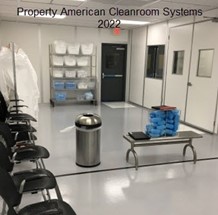
Figure 2. Cleanroom gown room
Door Openings That Are Too Small
It’s easy to overlook door sizing during the design phase, but this can create major issues later. If doors are not large enough to accommodate equipment, installation becomes more complicated and may require modifications to the cleanroom structure.
Planning for equipment access early can prevent unnecessary delays and added costs.
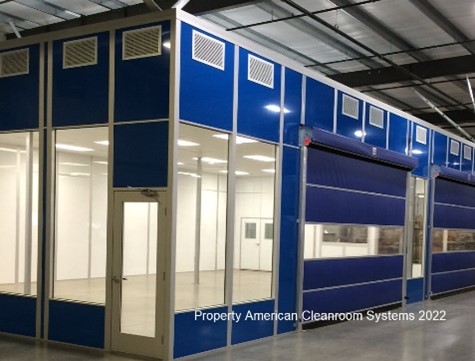
Figure 3. Cleanroom motorized roll up doors for bring in equipment
Limited Visibility Into the Cleanroom
Cleanrooms without sufficient windows can be difficult to manage. Without clear visibility, supervisors and visitors often need to enter the space to observe operations, which increases traffic and the risk of contamination.
Incorporating windows into the design helps reduce unnecessary entry and improves overall workflow.
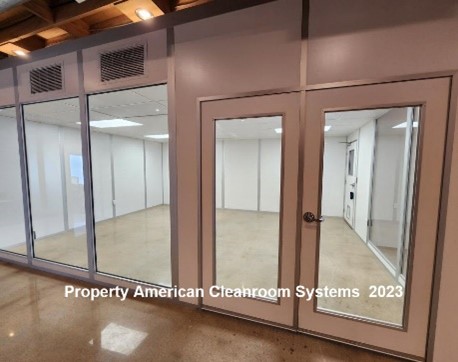
Figure 4. Cleanroom with floor-to-ceiling windows
No Defined Material Transfer Strategy
Another common issue is failing to plan how materials will move in and out of the cleanroom. Without designated systems like pass-through chambers, materials are often brought through areas not intended for that purpose.
This can disrupt workflow and increase contamination risk. A clear material transfer strategy should be part of the design from the beginning.
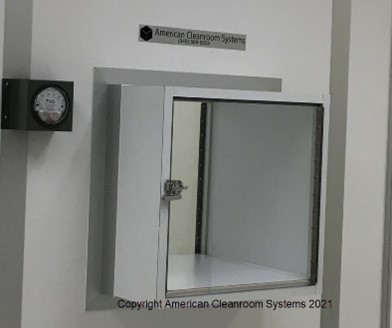
Figure 5. Cleanroom wall pass thru
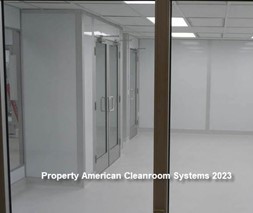
Figure 6. Cleanroom cart pass thru
Insufficient Ceiling Height
Ceiling height is sometimes minimized to reduce costs, but this can limit flexibility later. Equipment requirements, airflow considerations, and future modifications all depend on having adequate vertical space.
When ceiling height is too low, it can restrict what the cleanroom can support over time.
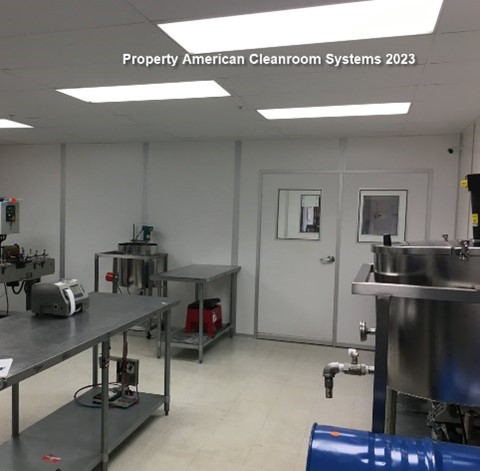
Figure 7. Low ceiling cleanroom
Designing Only for Current Needs
One of the most costly mistakes is designing a cleanroom based only on immediate requirements. As processes evolve and operations grow, the space may no longer be sufficient.
Planning for future expansion—whether in terms of equipment, personnel, or workflow—can help extend the life of the cleanroom and avoid expensive redesigns.
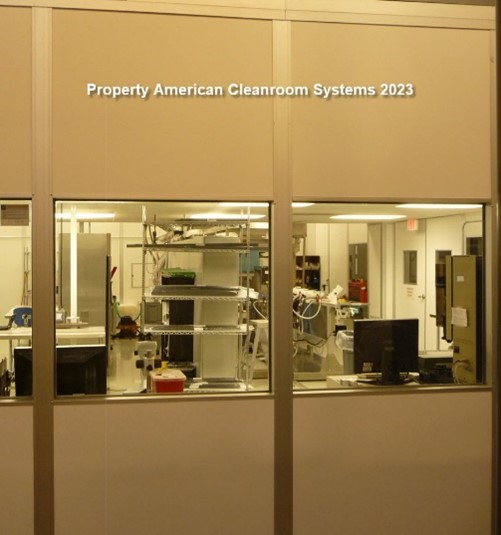
Figure 8. Crowded Cleanroom
Where These Issues Come From
Most of these challenges stem from the same root cause: decisions being made without a complete view of how the cleanroom will be used day to day.
Cleanroom design is not just about meeting classification requirements—it’s about understanding how people, materials, and processes interact within the space.
Final Thoughts
Avoiding these mistakes starts with a well-planned design process and a clear understanding of your operational needs. Small details can have a significant impact on performance, and addressing them early helps ensure a smoother project overall.
If you are in the planning phase, it can be helpful to start with a structured approach. Our Cleanroom Design Guide outlines the key elements to consider when designing a cleanroom and can serve as a starting point for your project.
Property American Cleanroom Systems 2023


 English