By Anthony Chien
President, American Cleanroom Systems ®
40+ years of cleanroom design and engineering experience
Last reviewed: September 2026
[View Full Author Profile]
Differential pressure in a cleanroom is the difference in air pressure between a cleanroom and an adjacent room or surrounding environment. It is used to control the direction of airflow and either prevent contaminants from entering a clean area or contain hazardous substances within a controlled area. Positive-pressure cleanrooms push air toward less-clean areas, while negative-pressure cleanrooms draw air inward.
Cleanroom users typically want higher pressure in cleanroom than in ambient area around cleanroom to prevent dirt from entering cleanroom thru cracks, crevices, or when doors are opened. When a door is cracked open you can feel the air exiting from a positive pressure cleanroom. Magnehelic gauges are installed in cleanrooms so the pressure can be monitored. The gauges are also used to show that the HEPA fan filter units are running and the air conditioning is running
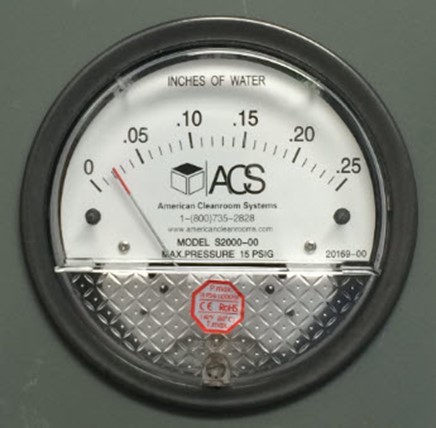
Figure 1. Magnehelic gauge used to measure differential pressure in cleanrooms. Analog mechanical.
| Question |
Answer |
| What is cleanroom differential pressure? |
The pressure difference between adjacent rooms or a room and its surrounding non cleanroom space |
| Why is it used? |
To control airflow direction and reduce contamination or contain hazards. |
| What is cleanroom positive pressure? |
The cleanroom is at a higher pressure than the adjacent non clean room space or ambient. |
| What is cleanroom negative pressure? |
The cleanroom is at a lower pressure than the adjacent non cleanroom space or ambient. |
| How is it monitored? |
Differential-pressure gauges including mechanical and digital, digital sensors, and cleanroom monitoring systems. |
| What units are used? |
USA inches of water W.C. H2O, Rest of world Pascals (Pa) |
Table 1. Cleanroom Differential Pressure Quick Guide
In positive pressure cleanrooms, the cleanroom AC system is typically used brings make up air from outside the cleanroom into the cleanroom to ensure the cleanroom is higher pressure than ambient. In Figure 2 you can see the AC system injects the cool air and makeup air into the plenum where it passes thru HEPA fan filter units to ensure that only clean air is entering the cleanroom.
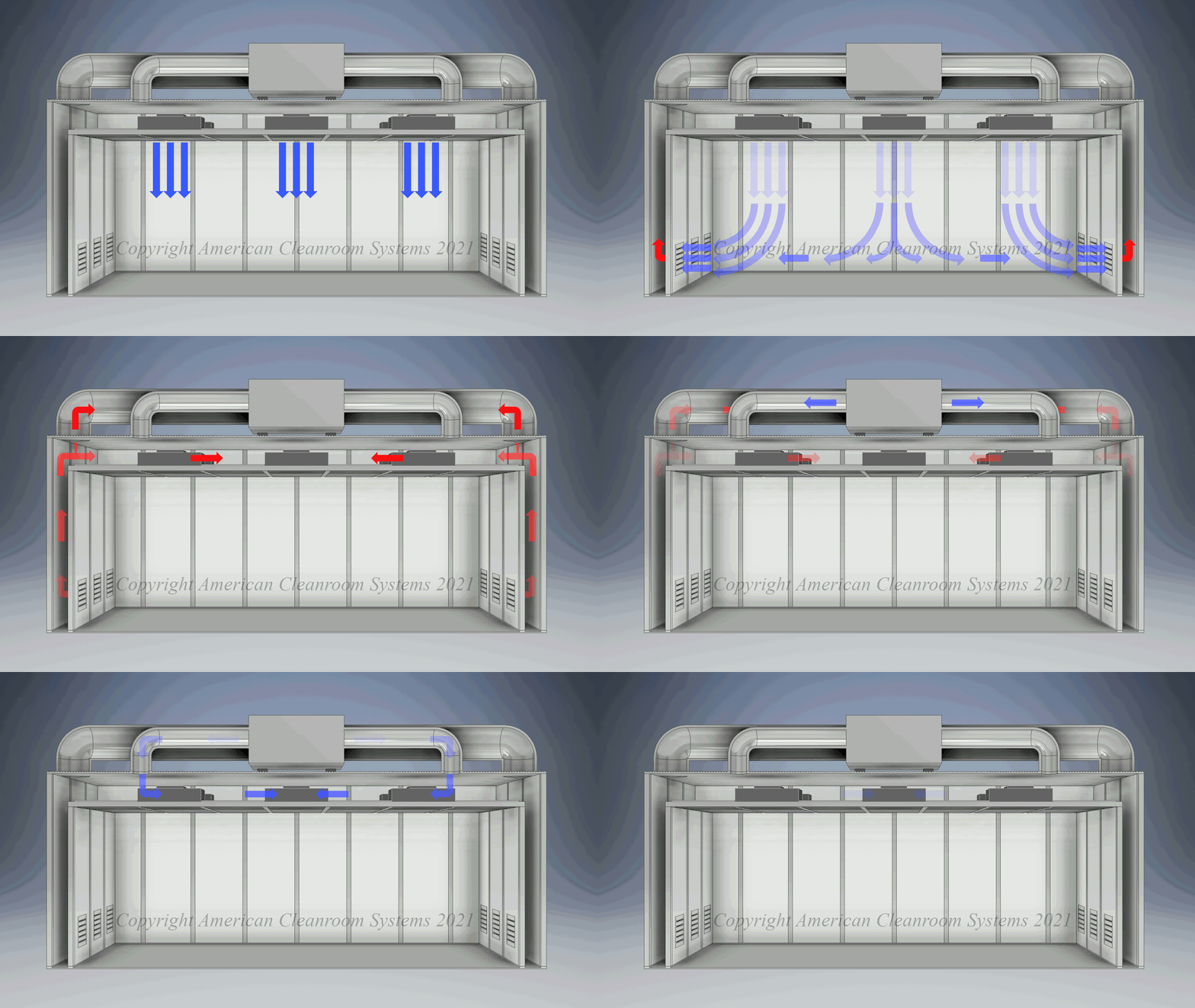
Figure 2. Air flow simulation recirculating modular cleanroom
Typically, a cleanroom has a pressure cascade where the higher class rooms have higher pressure and lower class rooms like gown rooms have lower pressure. This is done so that when door between the two rooms is opened the air flows from the higher class room to the lower class room preventing contaminants from moving into the higher class room. In figure 4 you can see ISO-8/class 100k gown room is at .03” inches of water while the class ISO-7/class 10k higher class main room is at 0.05” of water (higher differential pressure value).
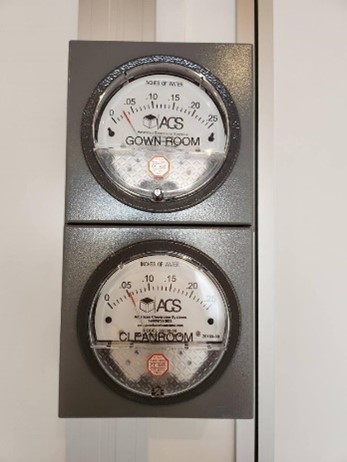
Figure 3. Analog Magnehelic gauge for cleanroom gown room and main cleanroom
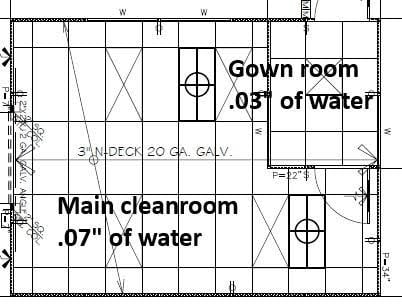
Figure 4. Pressure cascade.
In negative pressure cleanroom the cleanroom is at lower pressure than outside the cleanroom so if a door is cracked open you can feel the air flowing into the cleanroom. Negative pressure cleanrooms have exhaust systems that draw the air out of the cleanroom – typically to move hazardous fumes or chemicals. As a result, negative pressure cleanroom must typically have dedicated make up air AC units to replace the conditioned air being exhausted out of the cleanroom. Examples of negative pressure cleanrooms include USP800 compounding cleanrooms, hazardous materials cleanrooms, and Bio-safety cleanrooms
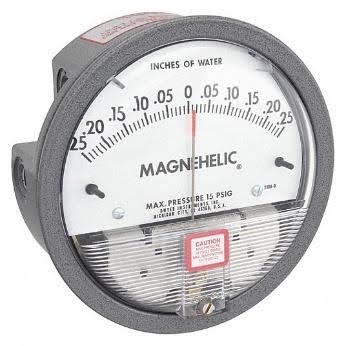
Figure 4. Negative pressure Magnehelic Gauge (photo courtesy of Dwyer Instrument)
|
Positive pressure |
Negative pressure |
| Room pressure |
Higher than adjacent space |
Lower than adjacent space |
| Airflow when door opens |
Air flows outward |
Air flows inward |
| Objective |
Protect the product or process from airborne contaminants |
Contain hazardous contaminants inside cleanroom and direct toward exhaust |
| HVAC |
Make up air supply greater than exhaust and exfiltration |
Exhaust air quantity is greater than make up air supply |
Table. 2 Positive pressure vs. Negative pressure cleanroom comparison
Cleanroom differential pressure is measured with Magnehelic gauges. The gauges are typically mounted outside the cleanroom at the entrance – one gauge for each room in the cleanroom. A plastic tube is run from the gauge to the room being measured and the gauge displays the difference in pressure between outside the cleanroom and the room. Units of measure are inches of water and pascals. The cleanroom may have analog Magnehelic gauges which have the advantage of not requiring electric power. Digital Magnehelic gauges in addition to showing room pressure can also send analog or digital signal to a monitoring system to archive the room pressures or set alarm points. Older cleanrooms may have manometers which show the room pressure like an analog thermometer.
There are two cleanroom pressure cascade options.
- Ambient: Most common is to measure all rooms to ambient (outside to the cleanroom). This makes it easy to see and understand the absolutive pressure of each room. In this scenario the Magnehelic gauges are typically placed together at the cleanroom entrance.
- Cascade: A less common is to place Magnehelic gauges at each door. In this cause the gauge is used to measure the difference in air pressure between the two rooms on each side of the door.
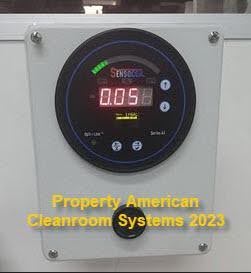
Figure 5. Digital Magnehelic gauge
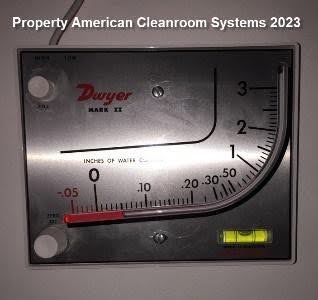
Figure 6. Manometer gauge used to measure differential pressure in cleanrooms
A recent development is digital cleanroom monitoring systems which incorporate electronic temperature, humidity, and differential pressure sensors.. They include feature such as digital displays, alarms, data archiving, digital communication of measurements, email, and text messaging. These are commonly used in the latest CGMP pharmaceutical cleanrooms.
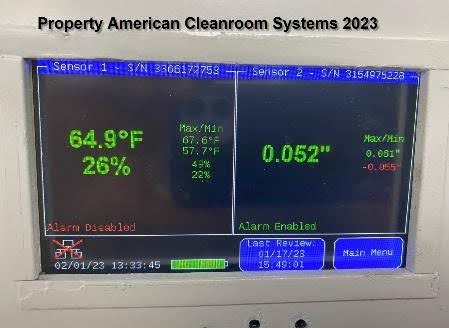
Figure 7. Cleanroom monitoring system
Sources
Table 3. Information Sources for differential pressure in cleanrooms
FAQs
Q: What is differential pressure in a cleanroom?
A: The difference in room air pressure between cleanroom and ambient (outside cleanroom).
Q: Why do cleanrooms use positive pressure?
A: Positive pressure keeps contaminants from entering the cleanroom.
Q: Why are some cleanrooms negative pressure?
A: Negative pressure keeps hazard fumes or microbes from exiting the cleanroom except from designed exhaust systems.
Q: What is a cleanroom pressure cascade?
A: A cleanroom pressure cascade is when the cleanroom room pressure increases as you go to higher classification. For example: ISO-8 Gown room .03” of water, ISO-7 Packaging room .05” of water, and ISO-5 filling room .09” inches of water.
Q: How is cleanroom pressure measured?
A: Cleanroom pressure can be measured via mechanical Magnehelic gauges, digital Magnehelic gauges, electronic air pressure sensors, manometers, or cleanroom monitoring system.
Q: What is a Magnehelic gauge?
A: A Magnehelic gauge measures the difference in air pressure from two locations. A mechanical Magnehelic gauge uses flexible spring loaded diaphragm. As the room pressure changes the diaphragm moves causing the magnetically linked pointer needle to shift position.
Q: What is the difference between Pa and inches of water column?
A: Pa or Pascal is metric unit for air pressure. Inches of water column W.C. is imperial unit for air pressure.
Q: What causes cleanroom pressure to fluctuate?
A: Open doors, changes in make up air supply volume, and changes in exhaust air volume.
What happens when cleanroom pressure is too low?
Q: How often should cleanroom pressure be monitored?
A: Cleanroom room pressure should be monitored continuously as it is one indicator that the cleanroom HEPA filtration systems and AC systems are working correctly. That is why Magnehelic gauges are usually placed at entrance of cleanroom where they are visible every time personnel enter or leave the cleanroom. More advanced electronic Magnehelic gauges or cleanroom monitoring systems can give audio, visual, electronic, email or text message alarms.
Summary:
Differential pressure in cleanrooms is used to either keep contaminants out (positive pressure cleanrooms) or exhaust hazardous fumes (negative pressure cleanrooms). Magnehelic gauges are used to monitor the differential pressure in cleanrooms.
The author Anthony Chien has worked at American Cleanroom Systems for more than 14 years . He has more than 40 years of cleanroom experience. Anthony has a BS and MS in Electrical Engineering specializing in semiconductor manufacturing from the University of Illinois. American Cleanroom Systems is a design build modular cleanroom manufacturer based in Rancho Santa Margarita CA. It is expert in ISO-4 thru ISO-8 (class 10 to class 100k) modular cleanrooms for pharmaceutical cleanrooms, medical device cleanrooms, and industrial cleanrooms. It has built more than 750 cleanrooms nation wid.
Property American Cleanroom Systems 2023


 Spanish