Designing a cleanroom requires careful planning to ensure proper performance, compliance, and long-term usability. Whether you are building a new cleanroom or expanding an existing one, decisions made early in the process will directly impact cost, timeline, and how well the space functions over time.
This guide serves as a practical cleanroom design checklist, outlining the key elements that should be defined before moving forward, along with common mistakes to avoid and ways to keep your project on schedule.
Before beginning construction, there are several core areas that should be clearly defined. Each of these plays a direct role in how your cleanroom performs once it is operational.
Cleanroom Classification
The first step is determining the required cleanroom classification. This defines the allowable particle levels in the space and drives decisions around airflow, filtration, and HVAC design.
ISO Class 5 environments are typically used in highly controlled applications like semiconductor manufacturing, while ISO 7 or ISO 8 may be sufficient for medical device or general manufacturing. Selecting the right classification early ensures the rest of the design aligns with your process requirements.
ISO 14644-1 Cleanroom Standards | Cleanroom Classifications
Once classification is established, the next consideration is the size and layout of the cleanroom. It’s important to design beyond immediate needs. Many projects run into issues because the space was sized only for current operations.
Allowing for future equipment, personnel, and workflow changes can prevent costly modifications later on.
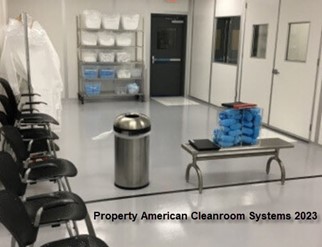
The gown room is a critical part of contamination control and should not be treated as an afterthought. It needs to be sized appropriately for the number of people using it, particularly during peak times like shift changes.
When gown rooms are too small, they quickly become a bottleneck and can slow down operations.
Figure 1. Cleanroom gown room
Flooring Selection
Flooring should be selected based on the application and cleaning requirements. Pharmaceutical and medical environments often use heat-welded vinyl, while industrial applications may use epoxy or sealed concrete.
Choosing the right flooring helps maintain cleanliness and ensures long-term durability.
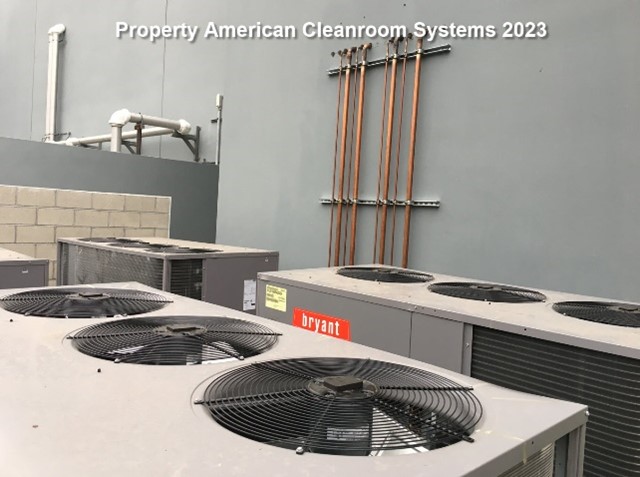
Cleanrooms generate heat from filtration systems, lighting, equipment, and personnel. Because of this, HVAC design is one of the most important parts of the process.
The system must be sized to handle the total heat load while maintaining consistent temperature and airflow. If this is overlooked, the cleanroom can become difficult to operate.
Figure 3. Cleanroom air conditioner
Wall System Materials
Wall systems should be selected based on durability, cleanability, and the specific environment. Materials like FRP are commonly used in pharmaceutical settings, while painted aluminum may be used where ESD control is required.
Planning how materials move in and out of the cleanroom is essential. Without a clear strategy, contamination risk increases and workflows become inefficient.
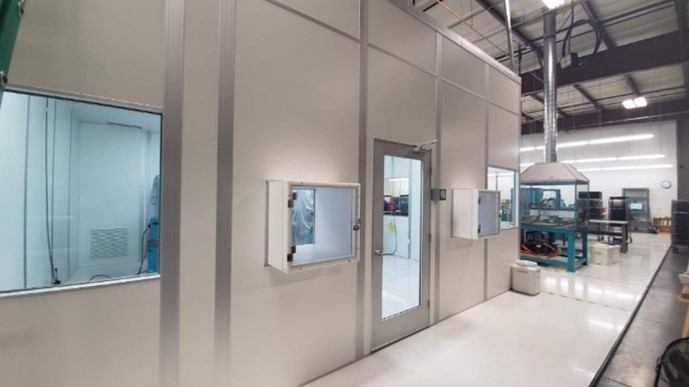
Pass-through chambers and designated entry points help separate personnel and material flow, which is critical for maintaining cleanliness.
Figure 5. Dual Cleanroom Pass thru’s
Windows and Visibility
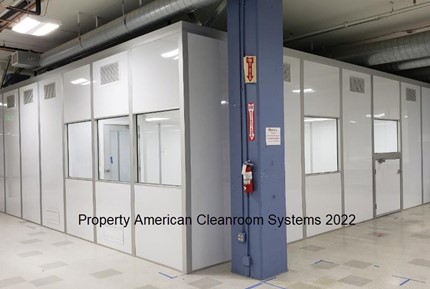
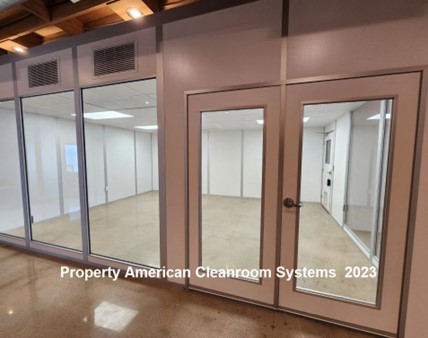
Windows are often overlooked but can have a meaningful impact on operations. They improve visibility into the cleanroom, making supervision easier and reducing unnecessary entry into the space.
Figure 6. Cleanroom with floor to ceiling windows
Common Cleanroom Design Mistakes
As you work through the checklist above, it’s just as important to understand where projects tend to go wrong.
One of the most common issues is underestimating air conditioning requirements. Cleanrooms generate significant heat, and without properly sized systems, the environment can quickly become uncomfortable.
Gown rooms are another frequent problem area. When they are undersized, they create bottlenecks and disrupt workflow.
Door sizing is also often overlooked. If doors are too small, equipment installation becomes difficult and may require modifications after the fact.
A lack of windows can limit visibility, making it harder to monitor operations without entering the cleanroom. Similarly, failing to include pass-through systems can lead to improper material handling and increased contamination risk.
Ceiling height is another factor that can restrict flexibility. If there isn’t enough clearance, it can limit equipment options and future expansion.
Finally, designing a cleanroom only for current needs often leads to problems as operations grow.
If you’d like a deeper breakdown of these issues, we cover them in more detail on our Cleanroom Design Mistakes page.
Keeping Your Project on Schedule
Once the major design elements are defined, the next step is making sure the project moves forward without unnecessary delays.
Starting early is one of the most effective ways to keep things on track. Cleanroom projects involve multiple phases—design, approvals, manufacturing, and installation—and each one takes time.
Permitting is another factor that can impact timelines. Depending on the project, this may include building approvals, structural reviews, and compliance requirements.
Clearly defining your requirements upfront helps prevent delays later. This includes classification, layout, equipment needs, and how personnel and materials will move through the space.
Working with an experienced cleanroom manufacturer can also streamline the process. The right partner will help identify potential issues early and keep the project moving.
Site preparation is another area that can cause delays if overlooked. Ensuring electrical systems, flooring, and HVAC infrastructure are ready before installation begins is critical.
Finally, reviewing drawings carefully before approval can prevent costly changes later. Once construction begins, modifications become significantly more difficult.
For additional guidance on keeping projects on schedule, you can also refer to our Cleanroom Project Timeline Guide.
Final Thoughts
A successful cleanroom project comes down to getting the fundamentals right. By working through each part of the checklist, avoiding common mistakes, and planning ahead for the timeline, you can create a cleanroom that performs reliably and supports your operation long-term.
American Cleanroom Systems® 2026 - Unauthorized use and/or duplication of this material without express and written permission from this website owner is strictly prohibited. Excerpts and links may be used, provided that full and clear credit is given to American Cleanrooms with appropriate and specific direction to the original content.


 Spanish