By Anthony Chien
President, American Cleanroom Systems ®
40+ years of cleanroom design and engineering experience
Last reviewed: September 2026
[View Full Author Profile]

Figure 1. ISO-5 modular cleanroom for Federal government research and development
What Is an ISO 5 Cleanroom?
An ISO 5 cleanroom is a controlled environment classified according to ISO 14644-1 for airborne particle cleanliness. At the ≥0.5 µm particle size, an ISO 5 cleanroom permits no more than 3,520 particles per cubic meter of air at the ≥0.5 µm, no more than 8,320 particles per cubic meter of air at the ≥1.0 µm, and no more than 29 particles per cubic meter of air at the ≥ 5 um. It typically has 250 to 300 air changes per hour of HEPA or ULPA filtered air. ISO 5i s approximately equivalent to the former U.S. Federal Standard 209E Class 100 classification.
The ISO 5 classification defines airborne particle concentration; cleanroom design features such as air-change rate, HEPA filtration, airflow pattern, pressure differential, temperature, humidity and gowning are determined according to the facility's application and design requirements.
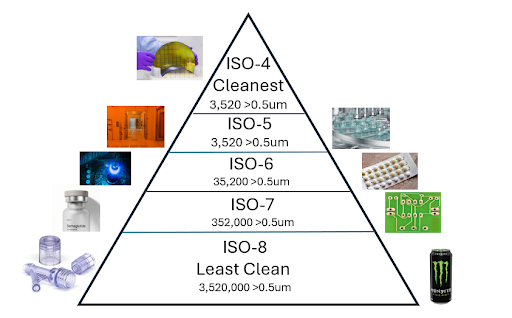
Figure 2. ISO cleanroom classes cleanest to least clean
ISO 5 is one of the most stringent ISO cleanroom classifications and is commonly used for semiconductor manufacturing, pharmaceutical filling, and other processes where extreme controlled particulate contamination is required.
| ISO 14644-1 |
| ISO Class 5 |
| ≤3,520 particles/m³ |
| ≤832 particles/m³ |
| ≤29 particles/m³ |
| FED-STD-209E Class 100 |
| Airborne particle concentration |
| Typically 300–480 air changes per hour |
| Medical devices, packaging, manufacturing, aerospace, food processing, etc. |
| Modular or standard construction |
Table 1: ISO5 class at a glance
ISO-5 cleanrooms typically have 300 to 480 air changes per hour of HEPA filtered air and less than 3,520 particles/meter3 greater or equal to 0.5 microns. By comparison, a conditioned office space (non -cleanroom space) would have more than 10,000 times as many particles per meter3. ISO-5 cleanroom classification also has requirements for >0.5 micron and >1 micron size particles (see table 1).
ISO 14644-1 Cleanroom Standards | Cleanroom Classifications
| 10 |
2 |
|
|
|
|
|
| 100 |
24 |
10 |
4 |
|
|
|
| 1,000 |
237 |
102 |
35 |
8 |
|
Class 1 |
| 10,000 |
2,370 |
1,020 |
352 |
83 |
|
Class 10 |
| 100,000 |
23,700 |
10,200 |
3,520 |
832 |
29 |
Class 100 |
| 1,000,000 |
237,000 |
102,000 |
35,200 |
8,320 |
293 |
Class 1,000 |
| |
|
|
352,000 |
83,200 |
2,930 |
Class 10,000 |
| |
|
|
3,520,000 |
832,000 |
29,300 |
Class 100,000 |
| |
|
|
35,200,000 |
8,320,000 |
293,000 |
Room Air |
There is a separate FED 209E cleanroom classification system that has been historically used in United States for industrial cleanrooms such as semiconductor cleanrooms and printed circuit board cleanrooms. The ISO cleanroom classification is on metric system (particles per meter3). The FED 209E cleanroom classification system is based on imperial system (particles per feet3). There are comparable ISO and FED 209E cleanroom classes for each level of cleanliness. An ISO-5 cleanroom classification corresponds to FED 209E class 100 cleanroom classification (see table 2).
US FED STD 209E Cleanroom Standards | Cleanroom Classfication
| 35 |
7 |
3 |
1 |
|
ISO 3 |
| 350 |
75 |
30 |
10 |
|
ISO 4 |
|
|
|
100 |
|
ISO 5 |
|
|
|
1,000 |
7 |
ISO 6 |
|
|
|
10,000 |
70 |
ISO 7 |
|
|
|
100,000 |
700 |
ISO 8 |
What Does ISO5 Classification Actually Control?
ISO5 classification addresses airborne particle concentration. It does not by itself mean that a room is:
- sterile
- GMP compliant
- microbiologically controlled
- contamination-free
- temperature/humidity controlled to a particular specification
- appropriate for a particular pharmaceutical process

Figure 3. ISO-5 electronics manufacturing cleanroom
Common applications for ISO-5 cleanroom classification rooms
- Semiconductor manufacturing cleanroom (photolithography
- Pharmaceutical manufacturing: compounding and packaging sterile medications, injectables, and intravenous drugs
- Biotech Aseptic Processing: Performing open product manipulation, cell culturing, in vitro fertilization, and genomics work
- Medical device manufacturing cleanroom for class 3 implantable devices
- Aerospace – NASA satellite assembly, component manufacturing
- R&D cleanroom (Universities and Federal National Laboratories)
- Hard drive manufacturing
What Does an ISO 5 Cleanroom Look Like in Practice?
- Laminar flow airflow patterns from ceiling to floor
- HEPA or ULPA filtration in ceiling ranging from 70% to 100% ceiling coverage
- Raised floor or low wall air return grills extending entire wall lengths
- Limited personnel to reduce contamination
- Full bunny suit gowning, plus gloves and face masks
- ISO-7 Material transfer and cleaning rooms
- Daily cleaning protocols – wipe down. vacuum, in pharma cleanrooms with s
- Pressure cascades – ISO-5 rooms at highest pressure, hallways lower, and gown rooms the lowest.
- Environmental monitoring – temperature humidity and room pressure with alarms and data storage.
- Particle counting – weekly manual or continuous particle count system
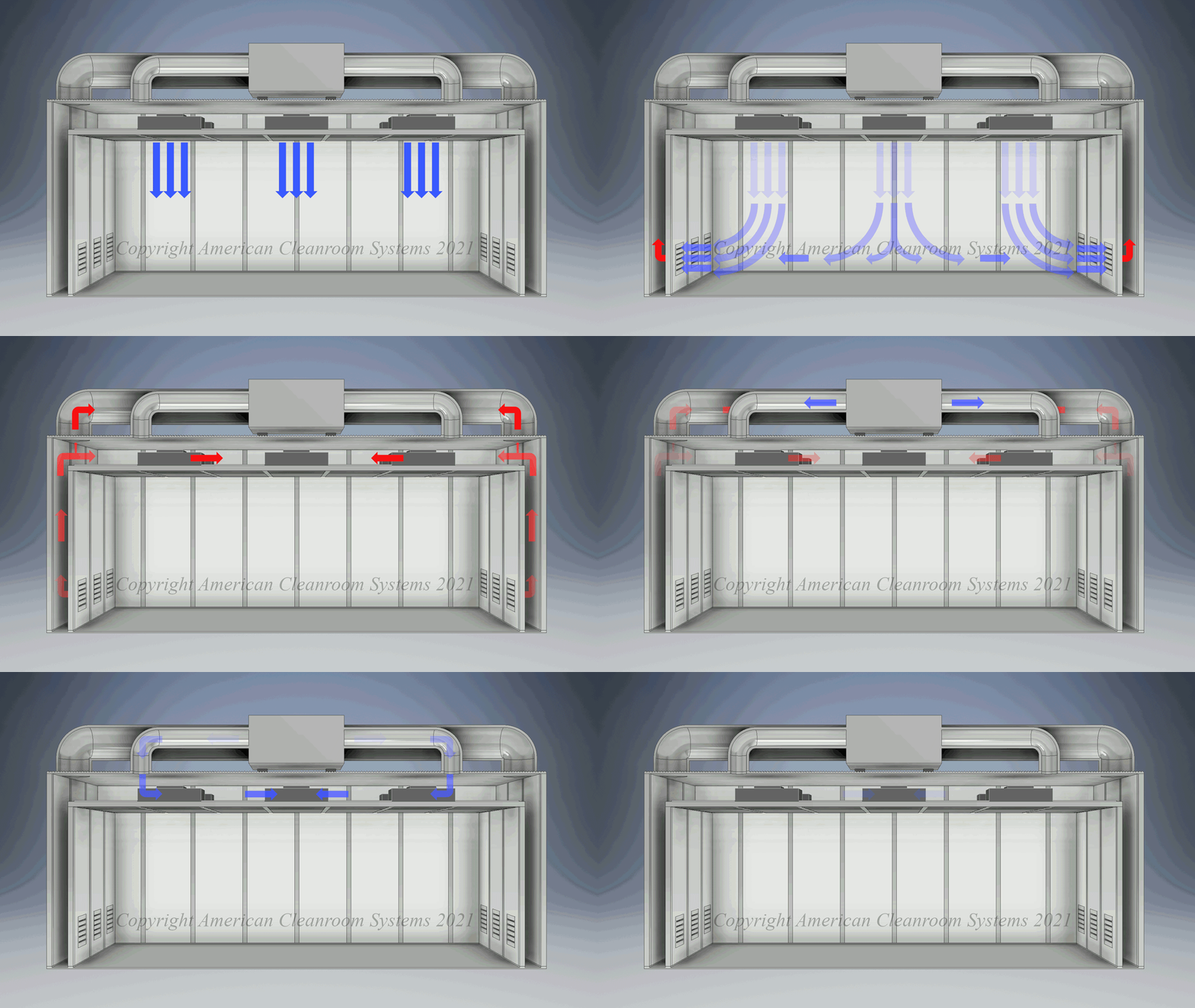
Figure 4. Air flow for recirculating modular cleanroom with low wall air returns
Air flow for ISO-5 cleanrooms are typically recirculating. In recirculating cleanrooms the clean air is cleaned over and over again (+300 times per hour) resulting the cleanest possible cleanroom. In one pass cleanrooms dirty air is drawn from outside the cleanroom and run thru the HEPA filters. The air then exits the cleanroom so one pass cleanrooms are not as clean. Also ISO-5 cleanrooms typically have tight temperature and humidity requirements which require a recirculating design. Learn more
Filtration for ISO-5 classification cleanrooms is done with HEPA filters or ULPA filters. The best modular cleanroom design uses a negative pressure plenum with HEPA fan filter units in the ceiling and incorporated low wall air returns to achieve laminar air flow. The HEPA filtered air sweeps dirt down to the floor and horizontally to the low wall air returns or down thru raised floor. HEPA filters are rated 99.97% of particles >0.3um. ULPA filters are rated to 99.999% of particles >.12um. Learn more
https://www.americancleanrooms.com/hepa-vs-ulpa-filters/

Figure 5. Cleanroom teardrop lights in ISO-5 cleanroom
Special lighting for ISO-5 cleanrooms is common. Semiconductor cleanrooms typically have photolithography rooms which require special amber lighting to not expose the photoresist. Often ISO-5 cleanrooms have 100% HEPA ceiling coverage so there is no room for lights. In that situation tear drop cleanroom lighting that mounts on t-grid between the HEPA filters is used. In some pharmaceutical cleanrooms the medicine being manufactured is light sensitive so the special amber lighting is also used. Learn more https://www.americancleanrooms.com/what-is-cleanroom-lighting/

Figure 6. ISO-5 Cleanroom raised flooring.
Special flooring for ISO-5 cleanrooms. Often ISO-5 cleanrooms have very tight temperature and humidity requirements. In that case it is common to use raised floors to ensure the HEPA filter air only flows vertically and can return from beneath the floor. The flooring is perforated to allow air to pass thru. The tiles are mounted on aluminum pedestals to create 2 feet of space beneath flooring for the air to flow. This is very typical in large semiconductor cleanrooms. Heat welded vinyl is the flooring of choice for ISO-5 pharmaceutical cleanroom due to the frequent cleaning of floors. Epoxy flooring can also used for ISO-5 cleanrooms. Learn more https://www.americancleanrooms.com/all-about-cleanroom-flooring/

Figure 7. ISO-5 cleanroom garments
Cleanroom gowning for ISO-5 classification cleanrooms. Typically, cleanroom personnel wear full bunny suits that cover staff from head to toe along with goggles and face masks. This minimizes particles from personnel. All the garments are manufactured from special non particulating cleanroom approved materials. Options include disposable or washable (you send back to cleanroom laundry) garments. It is critical the personnel wear cleanroom garments if user wants to maintain ISO-5 cleanroom classification. Learn more https://www.americancleanrooms.com/cleanroom-gowning-levels/
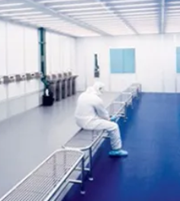
Figure 8. Cleanroom gown room
What gown room/airlock for ISO-5 classification cleanroom. Because an ISO-5 classification cleanroom does 300 air changes per hour if a door is even briefly opened to the dirty exterior it can let in millions of particles to the cleanroom which is supposed to only have 29 particles per cubic meter. The gown room/airlock will have ISO-7 HEPA filtration so less than 2930 particles per cubic meter are present when opening door between gown room and cleanroom. Gown room / airlocks are critical part of your ISO-5 classification cleanroom. Learn more https://www.americancleanrooms.com/what-is-a-cleanroom-airlock/
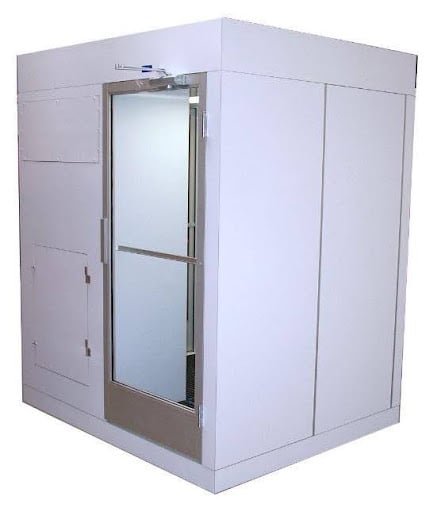
Figure 9. Air shower
Air showers are often used in ISO-5 cleanrooms to clean particles off the outside of personel cleanroom garments before they enter the ISO-5 space. Learn more. https://www.americancleanrooms.com/how-do-cleanroom-air-showers-work/
Standards for ISO5 class cleanrooms
 Figure 10. https://www.iso.org/home.html
Common ISO-5 Cleanroom Misconceptions / FAQs
Does ISO 5 means sterile?
Not necessarily. ISO 5 classifies airborne particle concentration; sterility and microbial control involve additional requirements.
Does every ISO 5 cleanroom needs exactly 300–480 air changes per hour.
Not necessarily. Air-change requirements depend on the cleanroom design, airflow strategy, room configuration and application.
Are ISO 5 and Class 100 are completely different classifications
No. ISO 5 corresponds approximately to the former Federal Standard 209E Class 100 classification.
Does ISO 5 automatically tells you what HVAC system to install."
No. The classification establishes airborne particle cleanliness requirements; system design depends on the facility and application. However many ISO5 cleanrooms are used for semiconductor manufacturing or pharmaceutical filling which have very tight +1 degree C or +5% humidity requirements.
The author Anthony Chien has worked at American Cleanroom Systems for past 14 years. He has more than 40 years of cleanroom experience. Anthony has a BS and MS in Electrical Engineering specializing in semiconductor manufacturing from the University of Illinois. American Cleanroom Systems is a design build modular cleanroom manufacturer based in Rancho Santa Margarita CA. It is expert in ISO-4 thru ISO-8 (class 10 to class 100k) modular cleanrooms for pharmaceutical cleanrooms, medical device cleanrooms, and industrial cleanrooms.
Property American Cleanroom Systems 2023


 Spanish
