By Anthony Chien
President, American Cleanroom Systems ®
40+ years of cleanroom design and engineering experience
Last reviewed: September 2026
[View Full Author Profile]
What Is an ISO 8 Cleanroom?
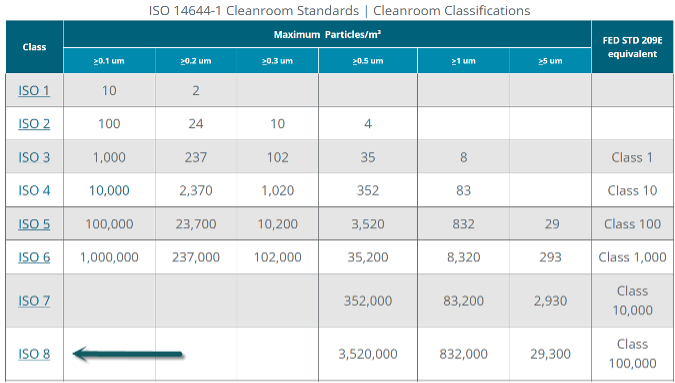
An ISO 8 cleanroom is a controlled environment that meets the ISO 14644-1 Class 8 limit for airborne particle concentration. At ISO 8, the maximum permitted concentration is 3,520,000 particles/m³ ≥0.5 µm, 832,000 particles/m³ ≥1.0 µm, and 29,300 particles/m³ ≥5.0 µm.
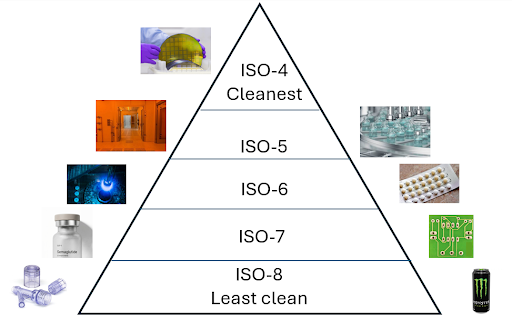
Figure 1. ISO cleanroom classes cleanest to least clean
ISO 8 is one of the least stringent ISO cleanroom classifications and is commonly used for manufacturing, packaging, assembly, and other processes where controlled particulate contamination is required but ISO 5–7 conditions are unnecessary.
| ISO 14644-1 |
| ISO Class 8 |
| ≤3,520,000 particles/m³ |
| ≤832,000 particles/m³ |
| ≤29,300 particles/m³ |
| FED-STD-209E Class 100,000 |
| Airborne particle concentration |
| Typically at least 20 air changes per hour |
| Medical devices, packaging, manufacturing, aerospace, food processing, etc. |
| Modular, stick-built, softwall |
Table 1: ISO 8 class at a glance
ISO-8 cleanrooms typically have 20 air changes per hour of HEPA filtered air and less than 29,300 particles/meter3 greater or equal to 5 microns. By comparison, a conditioned office space (non -cleanroom space) would have more than 10X as many particles per meter3. ISO-8 cleanroom classification also has requirements for >0.5 micron and >1 micron size particles (see table 1).
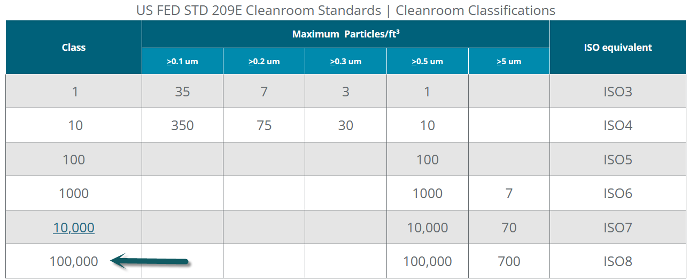
There is a separate FED 209E cleanroom classification system that has been historically used in the United States for industrial cleanrooms such as semiconductor cleanrooms and printed circuit board cleanrooms. The ISO cleanroom classification is on a metric system (particles per meter3). The FED 209E cleanroom classification system is based on the imperial system (particles per feet3). There are comparable ISO and FED 209E cleanroom classes for each level of cleanliness. An ISO-8 cleanroom classification corresponds to FED 209E class 100k cleanroom classification (see table 2).
What Does ISO 8 Classification Actually Control?
ISO 8 classification addresses airborne particle concentration. It does not by itself mean that a room is:
- sterile
- GMP compliant
- microbiologically controlled
- contamination-free
- temperature/humidity controlled to a particular specification
- appropriate for a particular pharmaceutical process
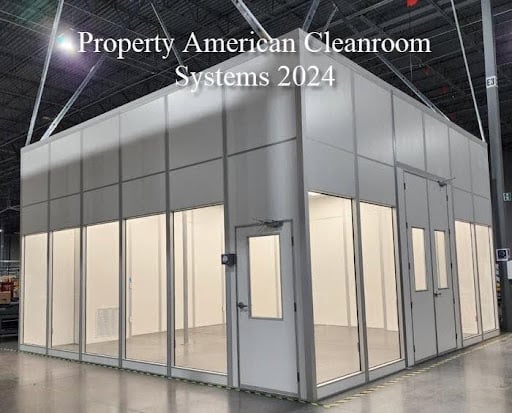
Figure 2. High Bay ISO 8 aerospace modular cleanroom
Common applications for ISO-8 cleanroom classification rooms:
- Plastic injection molding of subcomponents for medical devices modular cleanrooms
- 3-d printing modular cleanrooms
- Lamination of industrial products modular cleanrooms
- Sterile packaging modular cleanrooms
- Mask manufacturing modular cleanrooms
- Aerospace composites manufacturing modular cleanrooms
- Food processing cleanrooms
- Receiving for material QA modular cleanrooms
- Nutraceuticals repackaging modular cleanrooms
- Precision manufacturing modular cleanrooms
- E-liquid cleanrooms and CBD modular cleanrooms
- Modular cleanroom gown rooms
- Modular cleanroom hallways
- Modular cleanroom material transfer rooms
- Modular cleanroom washing rooms
- Modular cleanroom storage rooms
There are three different ways to build ISO-8 cleanrooms. They can be modular cleanrooms, stick-built (gypboard on studs) cleanrooms, or softwall cleanrooms.
- A modular cleanroom has the advantage of fast installation, easily modified or disassembled and moved to an alternative site, and can be upgraded to a higher cleanroom classification such as ISO-7.
- A stick-built ISO-8 classification cleanroom requires the gypboard walls to be painted with epoxy paint. The cost can be slightly cheaper than modular, but it takes significantly longer to build and is difficult to modify.
- A softwall ISO-8 classification cleanroom must be one pass so it cannot incorporate air conditioning. The stick-built cleanroom cost is similar to a modular cleanroom.
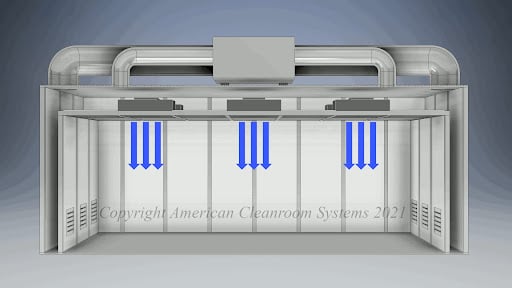
Figure 3. Air flow for ISO 8 recirculating modular cleanroom with low wall air returns
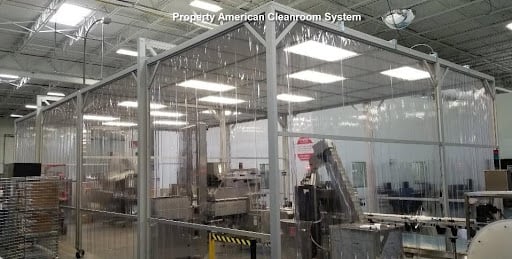
Figure 4. Softwall ISO 8 cleanroom by American Cleanroom Systems
Filtration for ISO-8 classification cleanrooms is done with HEPA filters in the ceiling. The best modular cleanroom design uses a negative pressure plenum with HEPA fan filter units in the ceiling and incorporated low wall air returns to achieve laminar air flow. The HEPA-filtered air sweeps dirt down to the floor and horizontally to the low wall air returns (see Figure 4 above).
Some contractors try to save money by using ceiling air returns on ISO-8 classification cleanrooms but this results in turbulent air flow and inferior cleanroom results.
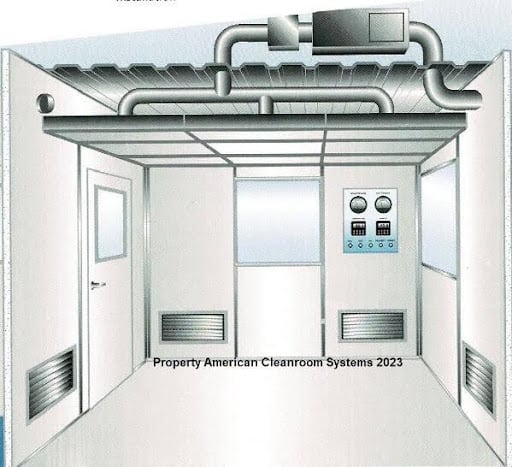
Figure 5. 1980’s cleanroom with HEPA filter in air handler
Other contractors try to save money by putting a HEPA filter into an AC standard air handler (typically stick-build cleanrooms). However, this will only work if the air handler is custom designed and manufactured to accept the HEPA filter pressure drop and provide sufficient air flow to get 20 air changes per hour. These custom air handlers are much more expensive and have long lead times. The best results come from using HEPA fan filter units in ISO-8 cleanroom classification rooms.
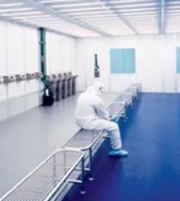
Figure 6. Cleanroom gown room
Cleanroom gowning for ISO-8 classification cleanrooms. Typically, cleanroom personnel wears cleanroom shoe covers to avoid tracking dirt into the cleanroom. Cleanroom head covering can be cleanroom bouffant or cleanroom hood. Finally, they wear clean room jackets extending down to the operator’s knees. All the garments are manufactured from special non-particulating cleanroom-approved materials. Options include disposable or washable (you send them back to the cleanroom laundry) garments. The cleanroom shoe covers and bouffant caps are typically disposable. It is critical the personnel wear cleanroom garments if the user wants to maintain ISO-8 cleanroom classification.
Why gown room/airlock for ISO-8 classification cleanroom? Because an ISO-8 classification cleanroom does 20 air changes per hour, if a door is even briefly opened to the dirty exterior it can take 30 to 45 minutes for the room to restore to class. The gown room/airlock will have HEPA filtration so the recovery time is typically reduced to under 5 minutes. Gown room/airlocks are a critical part of your ISO-8 classification cleanroom.
Sources
- ISO 14644-1:2015 — Cleanrooms and associated controlled environments — Part 1: Classification of air cleanliness by particle concentration https://www.iso.org/standard/53394.html
- Applicable regulatory/industry standards
- American Cleanroom Systems engineering resources

FAQs
Q: Who sets ISO cleanroom classes
A: The ISO cleanroom standards are set by the International Organization for Standardization (https://www.iso.org/standards.html). They are a private international organization with a membership of 167 national standards bodies.
Q: What industry still describes cleanrooms as class 10, class 100 etc?
A: Semiconductor is main industry that still uses FED STD 209E cleanroom classes.
Q: What is an ISO 8 cleanroom?
A: An ISO 8 cleanroom is a controlled environment classified under ISO 14644-1 based on airborne particle concentration. It permits higher particle concentrations than ISO 7, ISO 6, and ISO 5 cleanrooms.
Q: What is the ISO 8 particle limit?
A: For ISO 8 classification, the maximum concentration is 3,520,000 particles/m³ at ≥0.5 µm, 832,000 particles/m³ at ≥1.0 µm, and 29,300 particles/m³ at ≥5.0 µm.
Q: Is ISO 8 the same as Class 100,000?
A: Yes. ISO 8 is commonly considered equivalent to the former Federal Standard 209E Class 100,000 classification, although the two standards use different classification systems.
Q: Does an ISO 8 cleanroom require HEPA filters?
A: HEPA filtration is commonly used in ISO 8 cleanroom designs, but ISO 14644-1 classifies the room based on airborne particle concentration rather than simply specifying a particular filter configuration.
Q: How is an ISO 8 cleanroom certified?
A: An ISO 8 cleanroom is classified by measuring airborne particle concentrations at defined sampling locations according to the applicable procedures in ISO 14644-1.
Q: What industries use ISO 8 cleanrooms?
A: ISO 8 environments are used in applications including medical-device manufacturing, pharmaceutical and healthcare operations, sterile packaging, aerospace manufacturing, food processing, precision manufacturing, and other contamination-controlled processes.
than 40 years of cleanroom experience. Anthony has a BS and MS in Electrical Engineering specializing in semiconductor manufacturing from the University of Illinois. American Cleanroom Systems is a design build modular cleanroom manufacturer based in Rancho Santa Margarita CA. It is expert in ISO-45 thru ISO-8 (class 10 to class 100k) modular cleanrooms for pharmaceutical cleanrooms, medical device cleanrooms, and industrial cleanrooms.


 Spanish