By Anthony Chien
President, American Cleanroom Systems ®
40+ years of cleanroom design and engineering experience
Last reviewed: June 2026
[View Full Author Profile]
In 1985 I was a young semiconductor engineer. PC’s had monochrome screens, 256k RAM and 8-bit microprocessors, we were building cleanrooms by screwing FRP to sheet metal studs (now referred to as standard construction). Fast forward 37 years and in 2022, customers have the additional choices of modular cleanroom construction and more recently PODs.
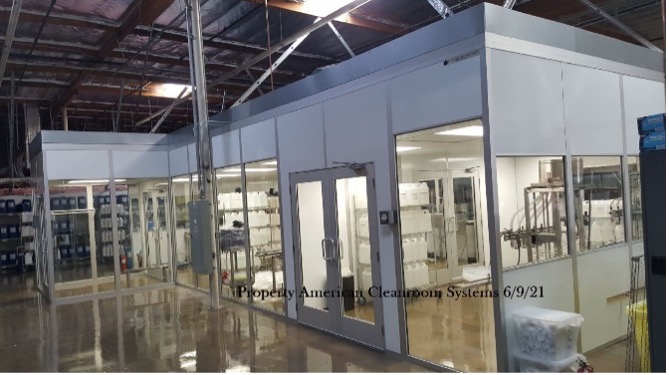 Figure 1. Modular Cleanroom
Modular cleanrooms use prefabricated components and dedicated installers significantly reducing the time to build a cleanroom. A dedicated design-build modular cleanroom company is typically responsible for all elements of the modular cleanroom project. In contrast to standard construction, the cleanroom is designed by the architect who passes it on to the general contractor as part of the overall project. The general contractor puts the different elements – drywall, ceiling, filtration, HVAC, electrical, flooring, and testing out to bid and the subcontractors work serially to complete the project. As a result, using modular cleanroom technology can significantly shorten the time necessary to build one’s cleanroom.
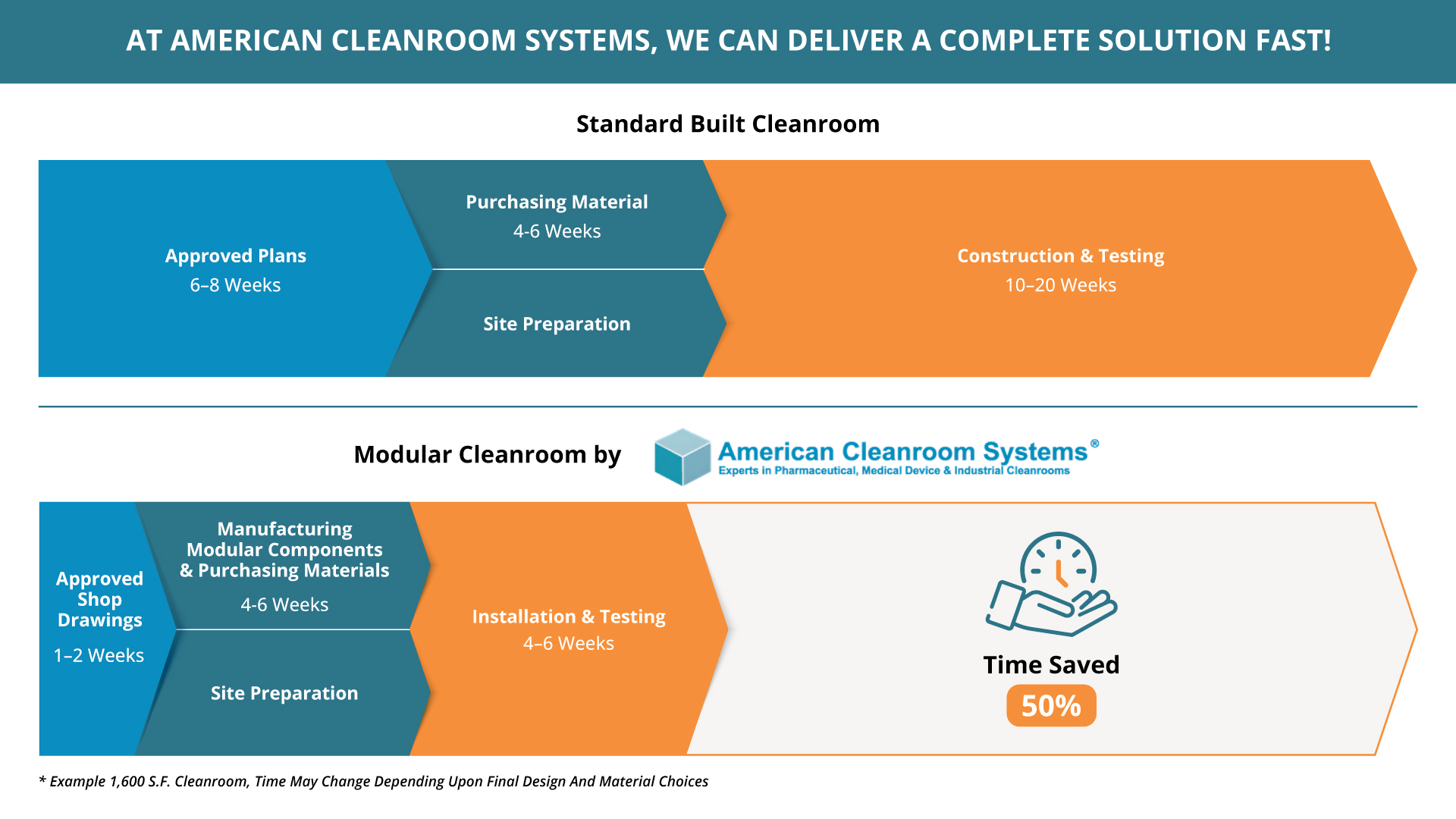 Figure 2. Standard construction vs. Modular construction
Modular cleanrooms are very flexible. The modular customer can choose from a broad selection of modular panel wall surfaces including vinyl, melamine, FRP, painted aluminum, and stainless steel. Modular wall core options include honeycomb, aluminum honeycomb, polystyrene core with gypsum sandwich, and polyiso-urethane foam. Key considerations for customer choice include cost, chemical resistance, static dissipative characteristics, fire resistance, sound insulating, heat-insulating, and moisture resistance. Floor-to-ceiling windows are also an option with modular cleanrooms.
 Fig. 3 Modular Wall Panels
The standard construction cleanroom wall is often epoxy-painted gypsum board on steel studs. Other standard construction options include lining the gypsum board walls with FRP or aluminum sheets.
The modular wall system uses anodized aluminum base channel, connecting posts, cap channel, and corner posts. These components form the structural backbone of the modular cleanroom. The connecting post typically includes internal electrical raceways for electrical wiring and mounting of electrical switches, convenience outlets, and data ports. The anodized aluminum provides good chemical resistance for weekly or daily cleanroom wipe-downs.
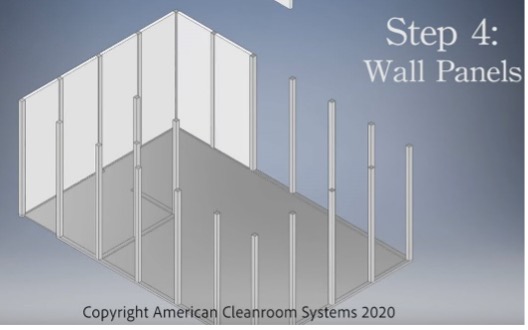 Figure 4. Aluminum Connecting Posts
Modular cleanrooms utilize a negative pressure plenum to circulate air to the HEPA fan filter units which remove contamination from the cleanroom. The roof deck, which forms the top of the plenum, is a structural element to hang the cleanroom ceiling grid, cleanroom lights, and HEPA fan filter units. In many cases, the AC system is placed on the roof deck (top of the cleanroom).
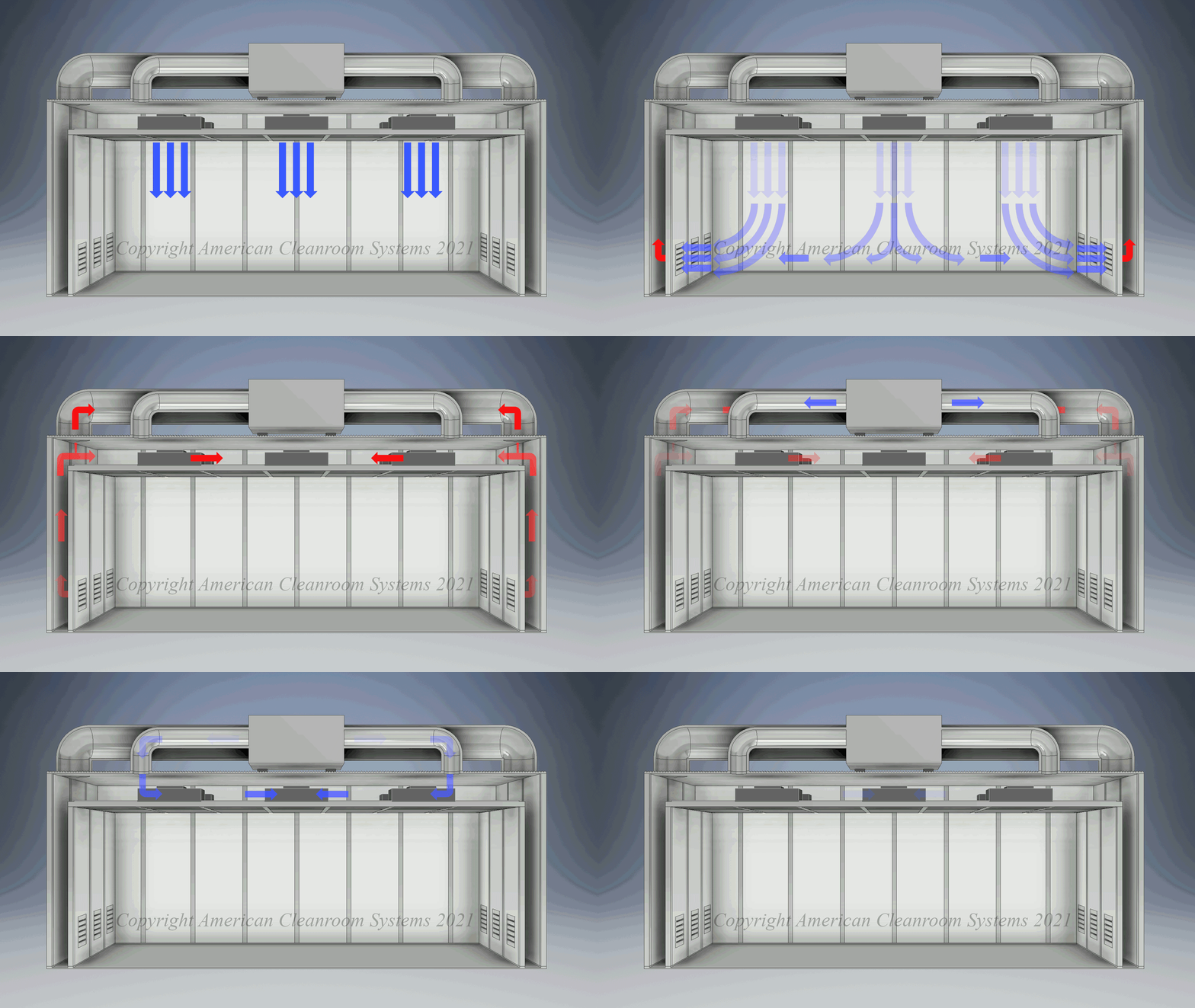 Figure 5. Modular Recirculating Cleanroom with Negative Pressure Plenum
 Standard-built cleanrooms most commonly use ducted HEPA fan filter units instead of a negative pressure plenum. This approach requires periodic balancing and grows very expensive if the cleanroom has a large number of HEPA fan filter units.
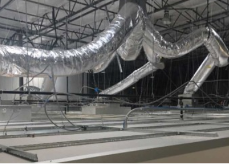 Figure 6. Ducted Cleanroom Design
Modular cleanroom installation is quick and clean as all components are precut to size at the factory. There is no cutting or painting on the jobsite. This is important as often the modular cleanroom is going into an active factory environment and customers want to minimize the disruption of on going production.
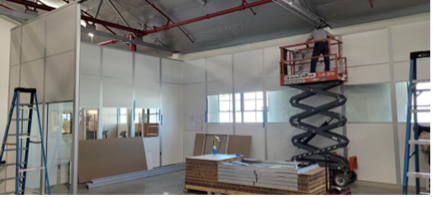 Figure 7. Modular Cleanroom Installation
 Other benefits of modular cleanrooms are future expansion or modification are easier as the cleanroom modular walls can be quickly disassembled and re-installed in different or larger configuration. Also, in the United States modular cleanrooms are often classified as equipment enclosures to qualify for better tax treatment.
Adoption of modular cleanrooms has gradually ramped up at a slow but steady pace. The pace was limited by several factors. Most architects do not receive significant education on modular construction and do not utilize it on a regular basis, so architect driven designs tended to be standard construction. General contractors are very experienced with standard construction and have established subcontractors for drywall, ceiling, and mechanical trades. Often the cleanroom is a smaller portion of the overall construction project, and the general contractor does not want to add another trade or subcontractor.
PODS are a further evolution of the modular construction concept. Instead of just using 4’x10’ wall panels and roof deck, PODS are typically 40’x8’ sections built in the factory and assembled on-site. Advantages are fast on-site construction. However, the large size of the sections means more structural elements have to be added to the design to allow them to be transported raising the cost. The primary users of PODS to this point have been pharmaceutical manufacturers who are less price sensitive.
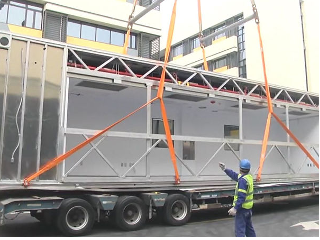 Figure 8. Photo from Gcon Website
Standard construction cleanrooms are still quite common. Especially for lower class cleanrooms where cost is the primary driver or when speed of installation is not a critical driver. However today the customer has the choice of modular, PODS and standard construction for his/her new cleanroom.
FAQs
Q: How much faster is building a modular cleanroom vs. building a stick built cleanroom?
A: The time necessary to design, manufacture and install of modular cleanroom and a stick built cleanroom varies by size and classification. Typically, a modular cleanroom can be built in about half the time as a stick built cleanroom.
Q: Why did old cleanrooms use ducted passive HEPA filters?
A: The ducted passive HEPA filter cleanroom design was industry standard starting in the 1950’s. The biggest users of cleanrooms were semiconductor manufacturing. Their need for class 100 rooms with tight temperature and humidity control drove this design.
As market for cleanrooms expanded into other industries with less demanding needs (class 10k and class 100k cleanrooms) such as printed circuit boards, medical device the popularity of modular cleanrooms using HEPA fan filter units grew. The modular cleanroom plenum design with HEPA fan filter units and standard commercial AC significantly reduced the lead time and cost of the cleanroom.
Q: What is difference between balancing a modular cleanroom with HEPA fan filter units and balancing a stick built cleanroom with ducted HEPA filters?
A: Balancing a modular cleanroom is fairly quick and simple. Adjusting the make up air from AC to cleanroom plenum raises or lowers the cleanroom room pressure. Individual room pressure can be adjusted thru dampers on return air grills. Typically it only needs to be done once and will stay balanced.
Balancing a stick built cleanroom with ducted HEPA filters is a major effort requiring putting a manometer hood on each HEPA filter and adjusting the dampers in each HEPA and main distribution ducts to get the correct air flow. This process needs to be redone on regular basis as the dampers in the ducting will move over time due to vibration and the high volume of air passing thru the main ducts. Due to the differences in distance from each HEPA to the air handler it can be challenging to get sufficient air flow thru HEPAs that are farther away.
Q: Is it hard to get building permits for modular cleanrooms?
A: The building code allows modular cleanrooms. The widespread adoption of modular cleanrooms means building departments are familiar with modular design and can approve it.
Q: I am renting my space and will have to move in 3 years. What is advantage of building a modular cleanroom over a stick built cleanroom?
A: A stick built cleanroom cannot be moved so tenant typically has to demolish it to restore leased area to original state when they end the lease. A modular can be disassembled, moved to new location and re-assembled saving customer significant money.
Q: What percentage of cleanrooms are modular?
A: A 2025 global study estimated that 48% of new cleanrooms are modular cleanrooms. The percentage continues to rise.
Q: What is difference in AC for modular cleanroom with HEPA fan filter units vs. a stick built ducted HEPA cleanroom?
A: Stick built ducted HEPA cleanrooms require expensive custom air handlers as part of the AC system to drive sufficient air changes per hour reach cleanroom class. Modular cleanrooms relay on HEPA fan filter units to provide sufficient HEPA filtered air changes per hour to meet cleanroom class and can use less expensive and readily available commercial DX AC units to provide cooling. This means lower cost and shorter lead time.
Q: Do modular cleanrooms cost more than stick built cleanrooms?
A: In most cases, modular cleanrooms are comparable in cost to stick built cleanrooms. The biggest reason people choose modular cleanrooms is the 50% faster completion time.


 Spanish